

Services
Crisis Prevention and Intervention (CPI)
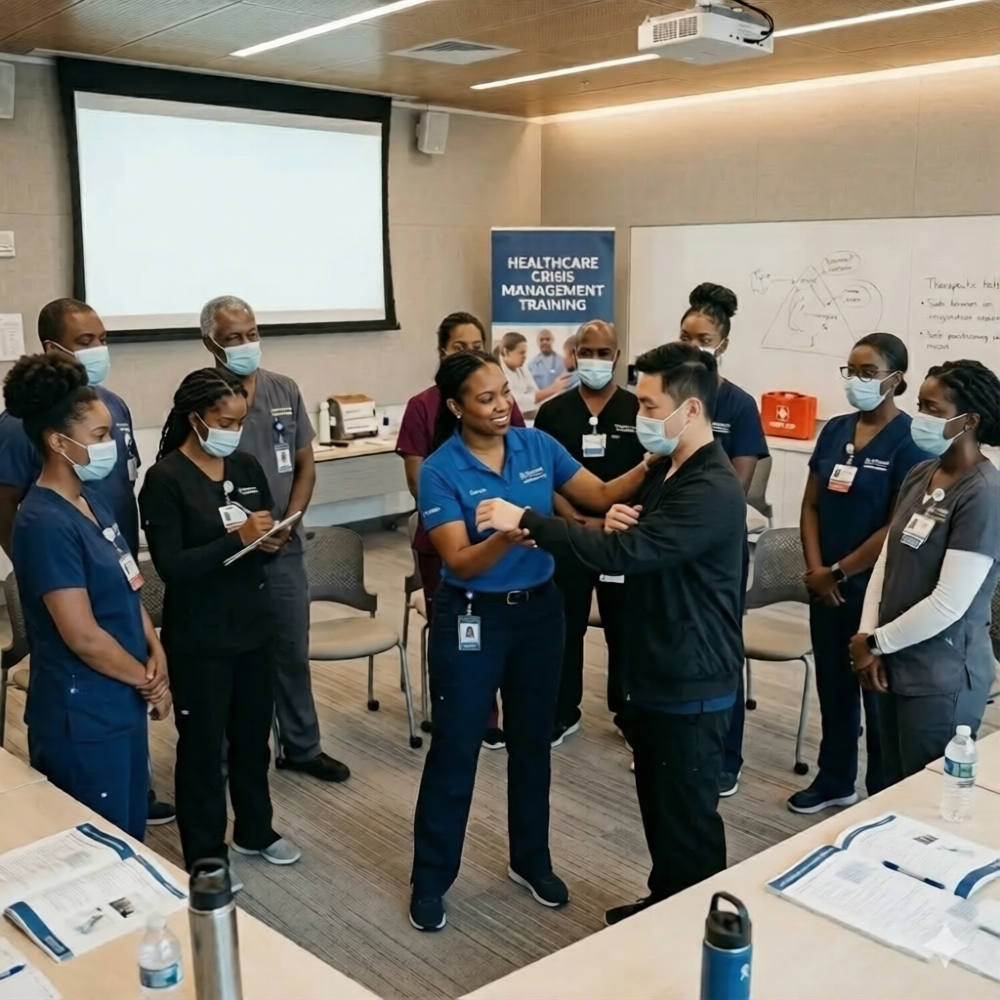
Our Crisis Prevention and Intervention (CPI) training equips staff with the skills necessary to recognize early signs of distress and effectively prevent behaviors from escalating into crisis. Participants learn evidence-based techniques focused on verbal de-escalation, nonverbal communication, and safe, respectful intervention strategies that prioritize the dignity of every individual involved.
This training emphasizes proactive response over reactive control, helping organizations reduce incidents, improve staff confidence, and create safer environments. Through real-world scenarios and practical application, your team will leave prepared to respond calmly, appropriately, and effectively in high-pressure situations.
First Aid, CPR, AED, and BLS Certification
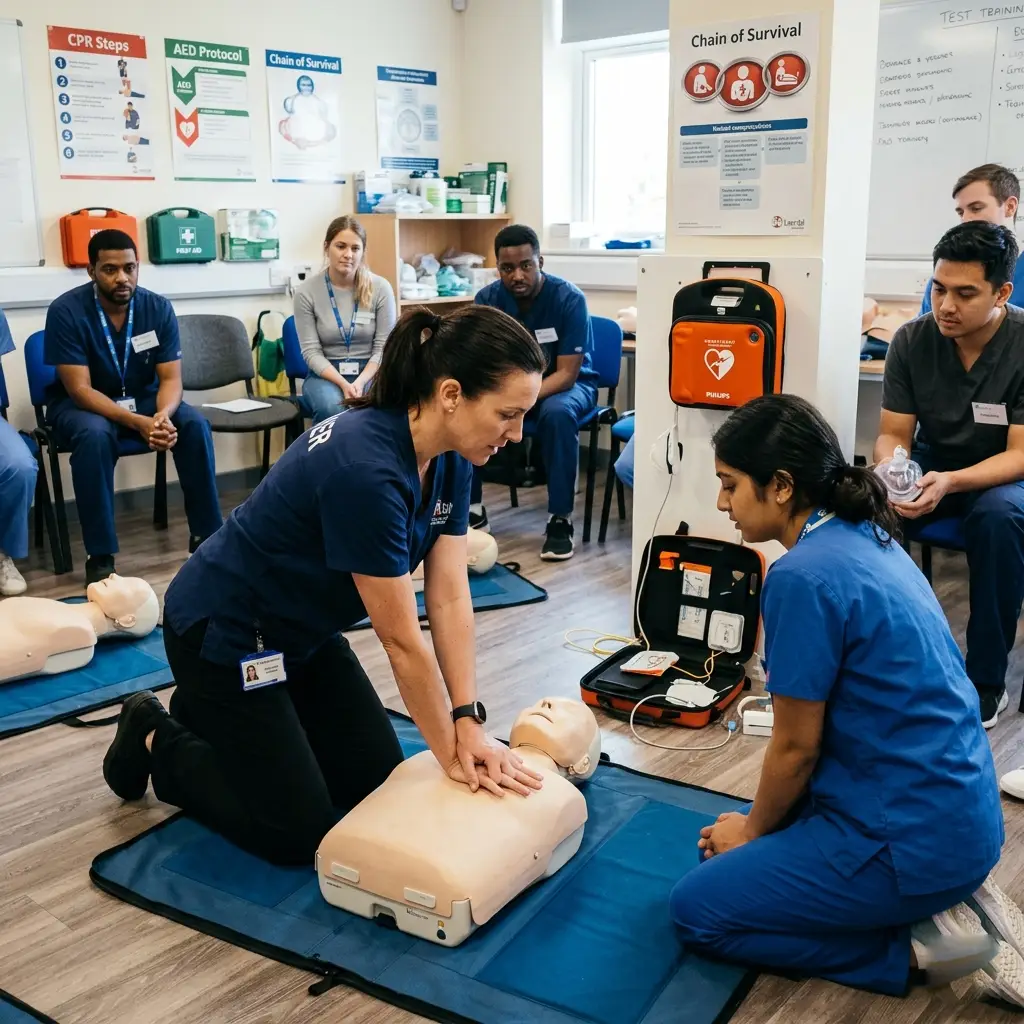
Our First Aid, CPR, AED, and Basic Life Support (BLS) certification training prepares individuals to respond quickly and effectively during medical emergencies. Participants are trained in essential life-saving techniques, including high-quality CPR, proper AED usage, and first aid responses for a wide range of injuries and conditions.
Designed to meet industry standards, this training combines hands-on practice with clear, guided instruction to ensure competence and confidence in critical moments. Whether responding to a workplace incident or a life-threatening emergency, your staff will be equipped with the knowledge and skills needed to act decisively and provide immediate care.
PRECISION Response Training Program
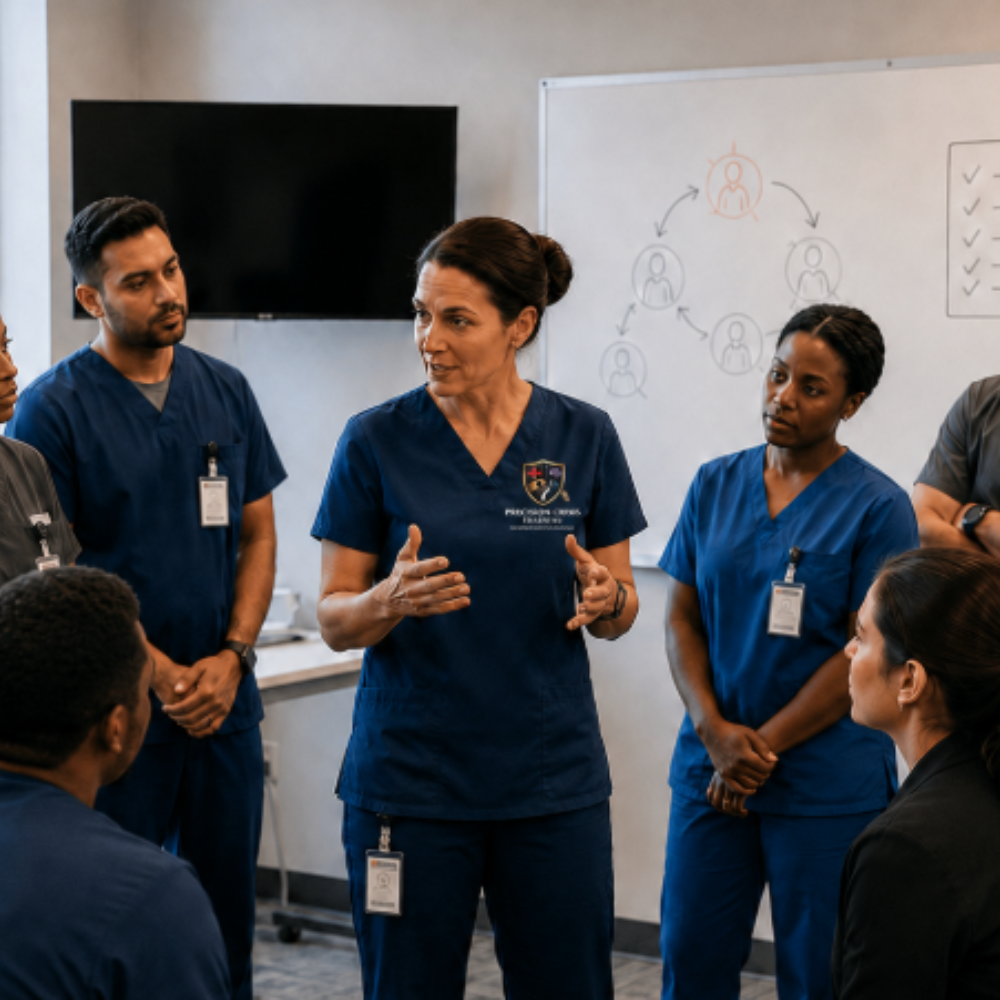
The PRECISION Response Training Program is our flagship crisis-prevention and response course, designed to prepare staff for the real challenges they may face in care-based and high-pressure work environments. The program helps participants recognize warning signs, reduce escalation, make informed decisions, and respond with confidence, professionalism, and care.
Through interactive instruction, guided discussion, hands-on activities, and realistic workplace scenarios, participants strengthen communication, situational awareness, teamwork, and decision-making.
The training emphasizes preparation, early intervention, dignity, respect, and trauma-informed care while helping staff understand how their communication, body language, emotional control, and actions can influence the outcome of a situation.
The PRECISION framework guides participants through each stage of crisis preparation and response, from identifying risks and managing the environment to intervening appropriately, supporting those involved, communicating key information, and navigating post-incident steps. The program can be adapted for group homes, behavioral health providers, healthcare teams, schools, senior-care organizations, community programs, and other workplaces responsible for the safety and care of others.

QPR Suicide Prevention Training
QPR (Question, Persuade, Refer) Suicide Prevention Training empowers individuals to recognize the warning signs of suicide and take meaningful action to help someone in crisis. Participants learn how to engage in direct, supportive conversations, encourage individuals to seek help, and connect them with appropriate resources.
This training is designed to build confidence in addressing sensitive situations while reducing stigma and fear around intervention. By equipping your staff with these critical skills, your organization becomes better prepared to support mental health and potentially save lives.
Custom Organizational Training
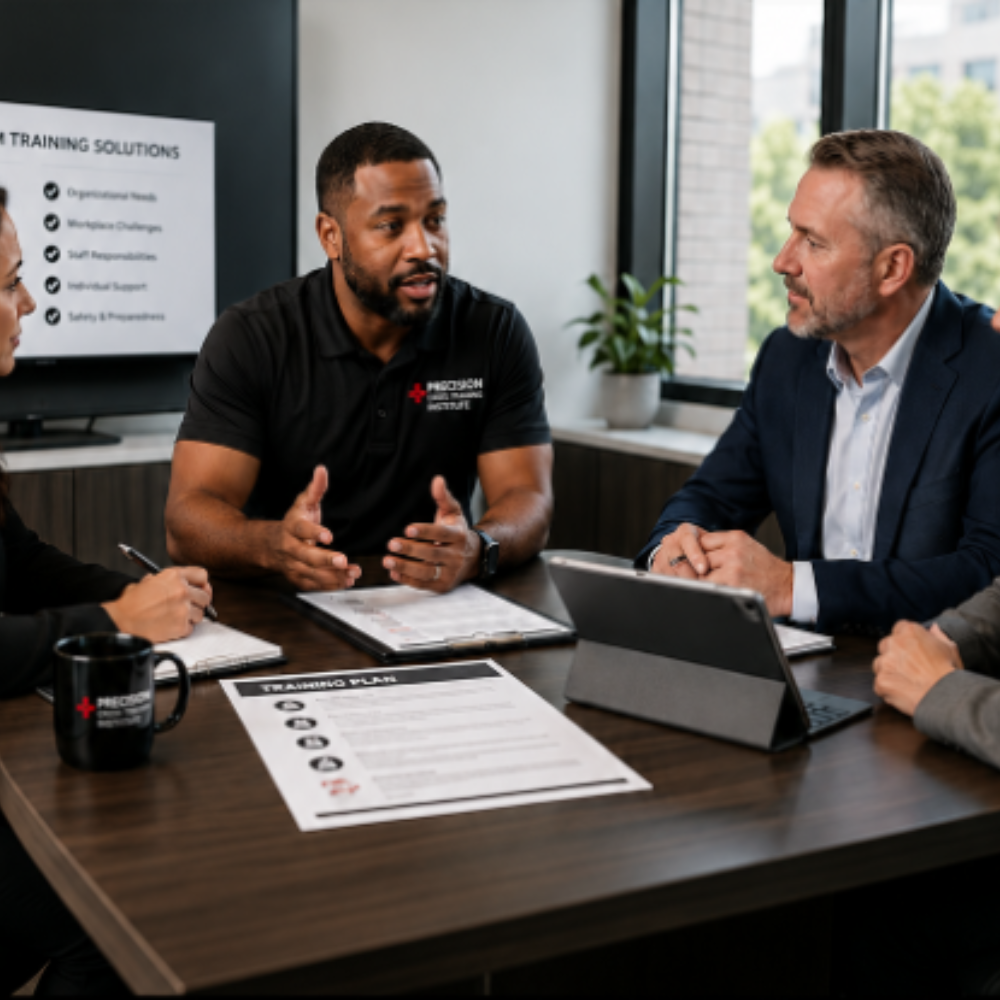
Every organization has its own responsibilities, workplace challenges, staff expectations, and populations to support. Our Custom Organizational Training service is designed to address those specific needs rather than relying on a one-size-fits-all approach. We work with organizational leadership to identify areas of concern, review current practices, and determine the knowledge and skills staff need to perform their roles more safely, confidently, and effectively.
From communication and crisis prevention to staff preparedness, policy implementation, and scenario-based response, each training is developed around the
real situations your team may encounter. The goal is to create practical instruction that connects directly to your workplace, strengthens staff performance, improves consistency, and supports safer outcomes for both employees and the individuals they serve.
Annual Recertification Training
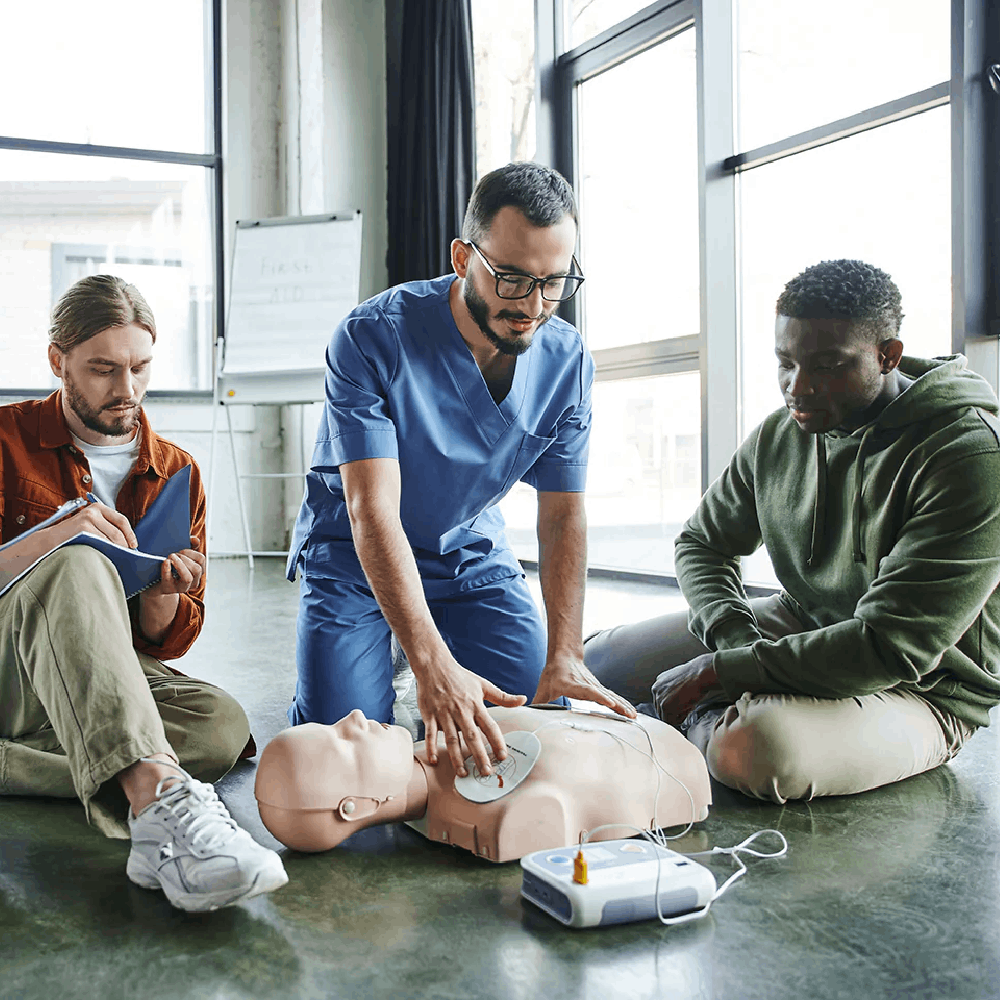
Our Annual Recertification Training ensures your staff remains compliant, confident, and up to date with essential safety and intervention skills. These refresher courses reinforce key concepts from initial trainings, address evolving best practices, and provide opportunities to review and strengthen critical response techniques.
Designed to meet regulatory requirements while maintaining high performance standards, our recertification sessions keep your team prepared to respond effectively in both routine and high-risk situations. By prioritizing ongoing development, organizations can reduce risk, improve staff consistency, and sustain a culture of safety, accountability, and quality care.